
Lords War
K3GAMESCasual
4.553.00 Reviews
- Version
- 1.1.12
- Installs
- 50.00K
- Age Rating
- Everyone
Screenshots
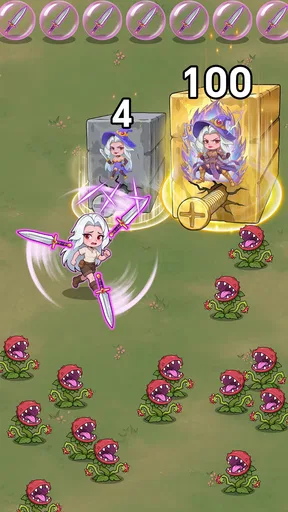
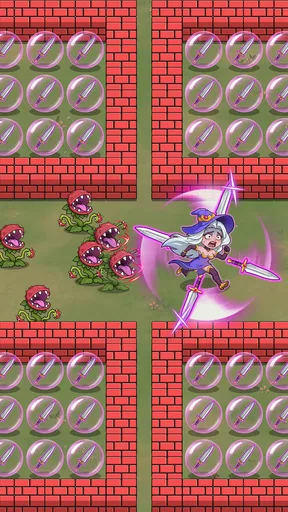
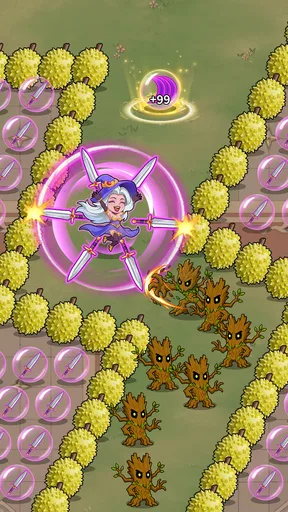
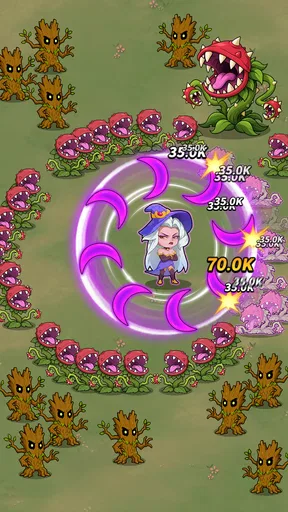
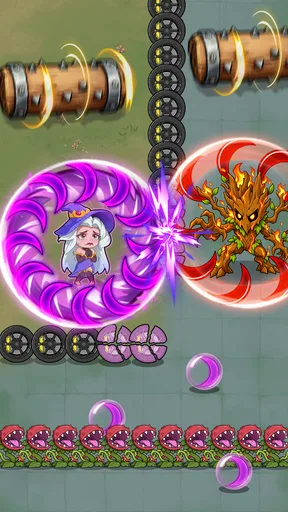
Our Review of Lords War
 Analysis by Appyee
Lords War is a casual game from K3GAMES that caught my attention because it presents a simple idea with a surprisingly demanding rhythm: make nimble moves, react quickly, and aim for bigger catches. I found it easiest to enjoy in short sessions, especially when I wanted something lighter than a strategy game but more active than a passive time-killer.
The game is free to download and is rated for Everyone, so it is approachable for a broad audience. It has a 4.5 average from around 385 ratings and has passed 50K installs, which suggests that it has already found a modest audience without feeling like an overcrowded mainstream release. Its current version is 1.1.12, and it runs on Android 6.0 or later.
My overall impression is positive, but with an important qualification: Lords War is best approached as a compact casual game, not as a deep competitive experience. Its appeal comes from quick decisions and the satisfaction of improving your timing. If you expect a large campaign, an elaborate social system, or a carefully documented free-to-play economy, you may find the experience less convincing.
How the quick-action loop feels in everyday play
The central appeal is the relationship between movement and reward. The store summary, “Nimble moves, big catches!”, gives a fair idea of the intended mood, but it does not explain why the game can hold attention. In practice, I found myself focusing less on long-term planning and more on reading the immediate situation correctly. A small hesitation can change the result, while a confident move can turn an ordinary attempt into a satisfying catch.
That makes Lords War a good fit for the gaps in a normal day. I could imagine playing it while waiting for a bus, taking a short break between tasks, or winding down before bed. It does not demand the kind of uninterrupted attention I associate with a large role-playing game, yet it still gives me something to do with my hands and eyes instead of asking me to tap through menus.
A realistic use case is a five-minute break during a busy afternoon. I would open the game, play a few rounds, notice that my timing was slightly off, and try once more with a more deliberate approach. That last attempt is often the one that feels worthwhile—not because the session is long, but because the game makes a small improvement feel visible.
The most useful habit is to treat every move as a timing decision rather than a reflex test. Rushing is tempting, especially when the action appears straightforward, but I generally got better results by watching the situation for a moment before committing. That advice sounds basic, yet it changes the feel of the game: instead of reacting randomly, I was building a repeatable rhythm.
Why the casual format works
Many casual games are designed around one endlessly repeated action, and that can make them feel empty after the first few minutes. Lords War has a slightly more active character because the player is encouraged to stay alert. Even when the session is short, there is a clear difference between an accidental success and one that comes from better positioning or timing.
I also like that the game does not require me to reserve a large block of time. That matters for players who enjoy games but do not want a daily obligation. A casual title should respect the player’s schedule, and Lords War generally fits that role better than games built around long missions or complicated upgrade routines.
There is a trade-off, though. Players who need constant novelty may find the basic action repetitive once the initial learning period is over. The experience depends heavily on whether you enjoy refining a small skill. If your preferred casual games provide a new puzzle, location, or mechanic every few minutes, this may feel too focused.
Small decisions that make a difference
One thing I learned quickly was not to judge a failed attempt only by its outcome. A miss can reveal whether I acted too early, moved too far, or ignored the changing position of the target. Thinking this way gives the game more depth than simply repeating the same gesture and hoping for a better result.
Another practical tip is to play with a consistent pace. Switching between frantic taps and very slow reactions made my performance less reliable. I had better sessions when I used a calm pattern: observe, make one clear move, then reassess. That approach is especially useful for younger players, because it turns the game into a gentle exercise in patience rather than a contest of speed alone.
I would also recommend stopping after a frustrating run instead of immediately spending more time trying to force a better result. Casual games can make a player chase one successful attempt, and that is where a relaxing break can become irritating. Lords War is more enjoyable when I treat improvement as optional rather than as something I must achieve before closing the app.
Progress, spending, and the pressure to continue
Lords War is free to play, but it includes in-app purchases ranging from $0.99 to $99.99 per item. That range is important for anyone deciding whether to install it. The low entry cost makes it easy to try, while the presence of much more expensive items means I would approach spending carefully and check each purchase before confirming it.
I do not see the free download as a promise that every part of the experience will remain equally comfortable without payment. A free-to-play game can be perfectly enjoyable without spending, but the player should still decide in advance how much money, if any, belongs in the experience. For me, the sensible starting point is zero spending until I understand how progress feels over several sessions.
The biggest question is not whether purchases exist; that is clear. The more meaningful question is how strongly the game pushes players toward them during normal progress. I would not assume that the most expensive item is necessary, nor would I assume that it has no effect on the experience. Since the purchase range alone does not explain the role of each item, my advice is to avoid buying impulsively when a difficult moment creates pressure.
That is particularly relevant for families. The Everyone rating makes the game broadly accessible, but an age rating does not replace purchase controls. If a child uses the device, I would enable the platform’s purchase protections and discuss that virtual items cost real money. This is a practical safeguard, not a criticism of the game itself.
How I would manage a free-to-play session
I would begin by playing without purchases and paying attention to three things: whether progress feels understandable, whether the game gives me a reason to return, and whether difficulty seems connected to my decisions rather than to a demand for payment. Keeping those questions in mind helps separate genuine enjoyment from the temporary excitement of unlocking something.
I would also avoid using purchases to solve a single bad session. If a run goes poorly, taking a break is usually a better response than buying an item while frustrated. That is one of the less obvious trade-offs in casual games: the cheaper short-term choice can be to close the app, while the expensive choice may only extend the same cycle for a little longer.
For adults who are comfortable spending, the purchase range still calls for restraint. A small optional purchase and a high-priced item are very different decisions, even though both appear under the same free-to-play label. I would set a personal limit before opening the shop, rather than deciding in the middle of a tense attempt.
Does spending decide the experience?
I cannot fairly describe Lords War as pay-to-win or fully fair based only on the existence of purchases. Those labels require knowing what the items do and how they affect progress or competition. What I can say is that the game combines free access with a wide purchase range, so players should examine the role of spending for themselves before committing money.
For someone who wants a purely skill-based challenge with no commercial pressure, a paid casual game with one upfront price may be a better match. For someone who wants to try first and decide later, Lords War has the more convenient starting point. The choice depends on whether flexibility or certainty matters more to you.
Fairness, competition, and the limits of what I would assume
The name Lords War may suggest a competitive setting, but I would not automatically treat it like a serious multiplayer strategy game. The available description points toward nimble action and catches, while the confirmed product details identify it as a casual game. That makes me more comfortable judging it by responsiveness and personal improvement than by the standards I would apply to an esports title.
If competition is part of the appeal, I would want to know whether success depends mainly on player timing, purchasable advantages, or some combination of both. Those distinctions matter. A player can accept optional cosmetic spending more easily than spending that changes the outcome of a contest. Without clear answers inside the game, I would keep expectations modest and avoid treating the experience as a test of equal competitive conditions.
My practical approach would be to compare my own results over time rather than comparing myself too aggressively with other players. If my performance improves after I adjust my timing, that feels like healthy progression. If improvement seems to depend mostly on buying something, the game becomes less appealing to me as a skill-based pastime.
This is also where Lords War differs from familiar alternatives. A traditional arcade game usually gives the player a direct score chase with rules that are easy to understand. A larger strategy game offers more planning, resource management, and long-term decisions. Lords War sits between those experiences: it has more active judgment than a basic tapper, but it does not present itself as a substitute for a full strategy campaign.
That middle position is its strength for casual players and its weakness for specialists. I would recommend it to someone who wants quick action and a little room to improve. I would point a dedicated strategist toward a deeper title, and I would point a pure arcade fan toward a game with a more transparent score-focused structure.
Who should try it—and who should skip it
Lords War is suitable for players who enjoy short sessions, quick reactions, and gradual improvement through repetition. It also works for people who want a game that can be opened without preparing for a long commitment. The Everyone rating makes it approachable for mixed-age households, provided adults handle purchase settings responsibly.
I would be less likely to recommend it to anyone who dislikes free-to-play stores on principle. Even if the core activity is enjoyable, the presence of items priced as high as $99.99 can be uncomfortable for players who prefer a completely fixed-cost experience. I would also skip it if I wanted a rich narrative, extensive exploration, or a clearly documented competitive ladder.
Players with older Android devices should find the minimum operating-system requirement manageable, since Android 6.0 is supported. Still, compatibility is not the same as identical performance on every device. I would keep expectations realistic if the phone is old or has limited free storage, especially when playing during a busy day and expecting immediate responsiveness.
What I would check before committing to the game
My first check would be whether the basic action remains enjoyable after the novelty fades. The opening impression is not enough for a casual game built around repetition. I would play several short sessions on different days and ask whether I am improving, relaxing, or simply reopening the app out of habit.
Next, I would look closely at the purchase screen before spending anything. The game is free, but the item range stretches from small purchases to a much larger amount. I would want the item descriptions, confirmation steps, and any visible consequences to be clear. If a purchase feels urgent or confusing, I would leave it alone.
I would also pay attention to how the game handles failure. A good casual loop lets me understand what went wrong and try again without making every miss feel like a punishment. Lords War works best for me when I can interpret a failed catch as feedback. If a player finds that repeated attempts only create pressure, the game may stop being a useful break.
Version 1.1.12 gives the game a specific current release to look for when installing, and K3GAMES is the developer named for it. I would keep the app updated through the normal platform channel, particularly if a later release changes balance or improves the way purchases and progress are explained.
One question many readers will have is whether the game is suitable for a child. The Everyone rating supports broad access, but I would still play alongside younger users at first. That lets an adult see how quickly the controls make sense and whether the child understands that optional items are not the same as free rewards.
Another natural question is whether it is worth installing for a few minutes at a time. In my experience, yes, provided you like repeated timing challenges. The game’s strongest use is not a long evening session; it is the short opportunity to focus on one small objective and then put the phone away.
For someone deciding between this and a paid alternative, I would frame the choice around tolerance for uncertainty. Lords War costs nothing to try, but its purchase model means the player must manage spending decisions. A paid game costs more at the beginning, yet often feels simpler because the price is settled upfront. Neither approach is automatically better.
My trust verdict after using Lords War
I came away seeing Lords War as an accessible casual game with a worthwhile timing loop, not as a fully developed war strategy experience. Its strongest quality is the way a short attempt can still feel active and personal. When I slow down, read the moment, and make a deliberate move, the result feels earned.
The main caution is the free-to-play structure. The game can be tried without payment, but the in-app purchase range deserves attention, especially in a household where other people can access the device. I would not spend until I understood how the items fit into progress, and I would never use a purchase as a reaction to frustration.
The 4.5 average from around 385 ratings and more than 50K installs make it easy to see why curious players may want to test it. Those figures are encouraging, but they do not replace personal fit. A player who enjoys quick catches and repeated timing practice may find a pleasant little routine here, while someone seeking strategic depth or a fully fixed-price experience should choose differently.
My recommendation is therefore measured but favorable: try Lords War if you want a free, casual game for short bursts and you are comfortable making careful decisions around optional spending. Keep your expectations focused on nimble play and incremental improvement. It is most trustworthy as a small skill-based break when you remain in control of both your time and your budget.
Verdict
Strengths of Lords War
- Simple controls make battles easy to learn on mobile devices.
- Hero upgrades and troop management add strategic depth.
- Regular events provide extra objectives and rewards.
- Multiple units encourage experimentation with different army setups.
- The fantasy setting gives the game a clear visual identity.
Limitations of Lords War
- Progress can feel slow without frequent play or resource spending.
- Some menus and features may overwhelm new players at first.
- Online-focused gameplay depends on a stable internet connection.
- Repeated battles may become predictable during longer sessions.
- Device performance can vary during large-scale combat scenes.
Other Releases by K3GAMES
View All
Epic War
Casual3.7
Similar Picks in This Category
View All
My Talking Angela
Outfit7 Limited4.2

My Talking Tom
Outfit7 Limited4.3

Pou
Zakeh4.2

My Talking Tom 2: Pet Game
Outfit7 Limited4.3

Candy Crush Saga
King4.6

Bridge Race
Supersonic Studios LTD4.1
Frequently Asked Questions
What is Lords War and what kind of gameplay does it offer?
Lords War is a strategy game focused on building a kingdom, developing resources, training armies, and competing against other players. During my time with the game, progression combined base management with map exploration, hero or troop upgrades, and battles that required planning rather than simply tapping an attack button. It is best suited to players who enjoy long-term development, alliances, and competitive multiplayer systems.
Can Lords War be played for free, or does it require in-app purchases?
Lords War can generally be downloaded and played without paying an upfront purchase price, but it may include optional in-app purchases. These purchases can provide resources, speed up construction, unlock bundles, or support faster character and army progression. Free players can still experience the main gameplay, although advancement may take more time and competitive events can make paid items more noticeable.
Does Lords War require an internet connection to play?
Yes, Lords War is primarily designed as an online strategy experience, so a stable internet connection is normally required for important features. Kingdom development, multiplayer battles, events, alliances, rankings, and server communication depend on online access. You may be able to open certain screens while temporarily offline, but you should not expect the complete game, especially competitive functions, to work reliably without an active connection.
Is Lords War suitable for beginners, and how difficult is it to learn?
Lords War is accessible to beginners because the early tutorial introduces the main systems step by step, including construction, research, troop training, and missions. However, the game becomes more complex as additional buildings, commanders, resources, and strategic choices become available. New players should follow beginner objectives, avoid spending premium currency too quickly, and join an active alliance to receive advice and useful support.
What should I know about privacy, permissions, and device compatibility before downloading?
Before installing Lords War, check its current Google Play or App Store listing because supported operating systems, storage requirements, permissions, and privacy policies can change with updates. The game may request network access and other permissions needed for account management, notifications, payments, or social features. A reasonably modern device and sufficient free storage are recommended, since strategy games can receive large content updates over time.
Play our best games!


